

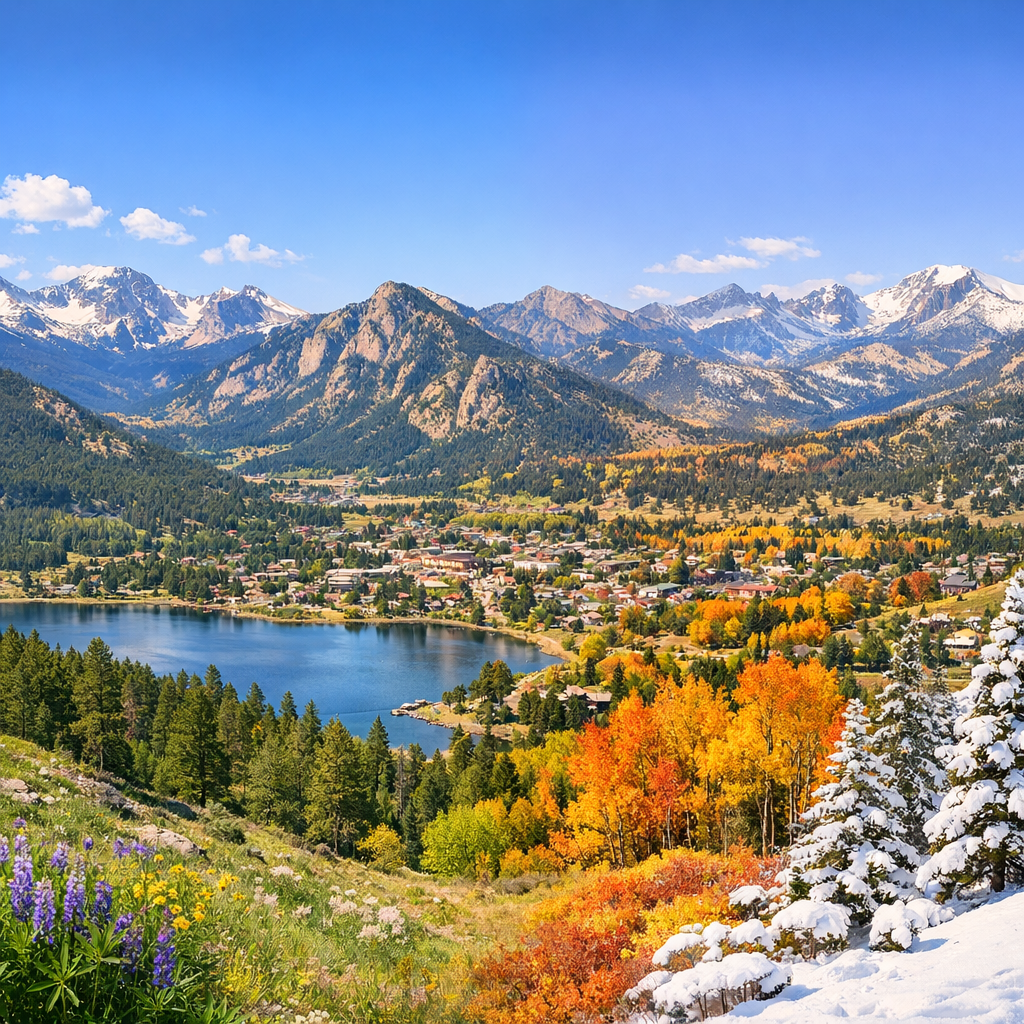
Estes Park, nestled in the heart of Colorado’s Rocky Mountains, boasts a climate as diverse and captivating as its scenic landscapes. Classified under the Köppen system as Dfc, or subarctic with cool summers and year-round rainfall, our town experiences a wide range of weather conditions throughout the year.
Seasonal Variations
Spring
Spring in Estes Park is a season of renewal and unpredictability. April and May often bring a mix of rain and snow, with temperatures ranging from the 20s to the 60s. It’s not uncommon to experience a sunny morning followed by an afternoon snowstorm. This variability makes it essential for residents and visitors to be prepared for sudden weather changes.
Summer
Summers are characterized by warm days and cool nights. Average high temperatures hover in the 70s, providing comfortable conditions for outdoor activities. However, afternoon thunderstorms are frequent, typically developing in the early afternoon and dissipating by evening. These storms, while brief, can be intense, so it’s advisable to plan outdoor excursions accordingly.
Fall
Autumn brings cooler temperatures and clear skies, with daytime highs ranging from the 50s to 70s. The changing aspen leaves paint the landscape in vibrant hues, making it a favorite season for photographers and nature enthusiasts. While major snowstorms are rare, early snowfall can occur, especially in late October and November.
Winter
Winters are relatively mild compared to other mountainous regions. Daytime temperatures often rise above freezing, and while snow is common, it usually melts within a few days due to abundant sunshine. The average high temperatures range from the 30s to 40s, making winter activities like snowshoeing and cross-country skiing popular among locals and visitors alike.
Altitude and Weather
At an elevation of approximately 7,500 feet, Estes Park’s altitude significantly influences its climate. The thinner atmosphere results in more intense sunlight and rapid weather changes. Visitors should be aware of the potential for altitude sickness and take necessary precautions, such as staying hydrated and allowing time for acclimatization.
Preparing for the Elements
Given the dynamic weather patterns, layering is key when dressing for the outdoors. A typical outfit might include a moisture-wicking base layer, an insulating middle layer, and a waterproof outer layer. Always check the local forecast before heading out, and be prepared for sudden changes, especially if venturing into higher elevations.
Understanding Estes Park’s unique climate patterns enhances our appreciation of this beautiful region and ensures a safe and enjoyable experience for all who visit.