

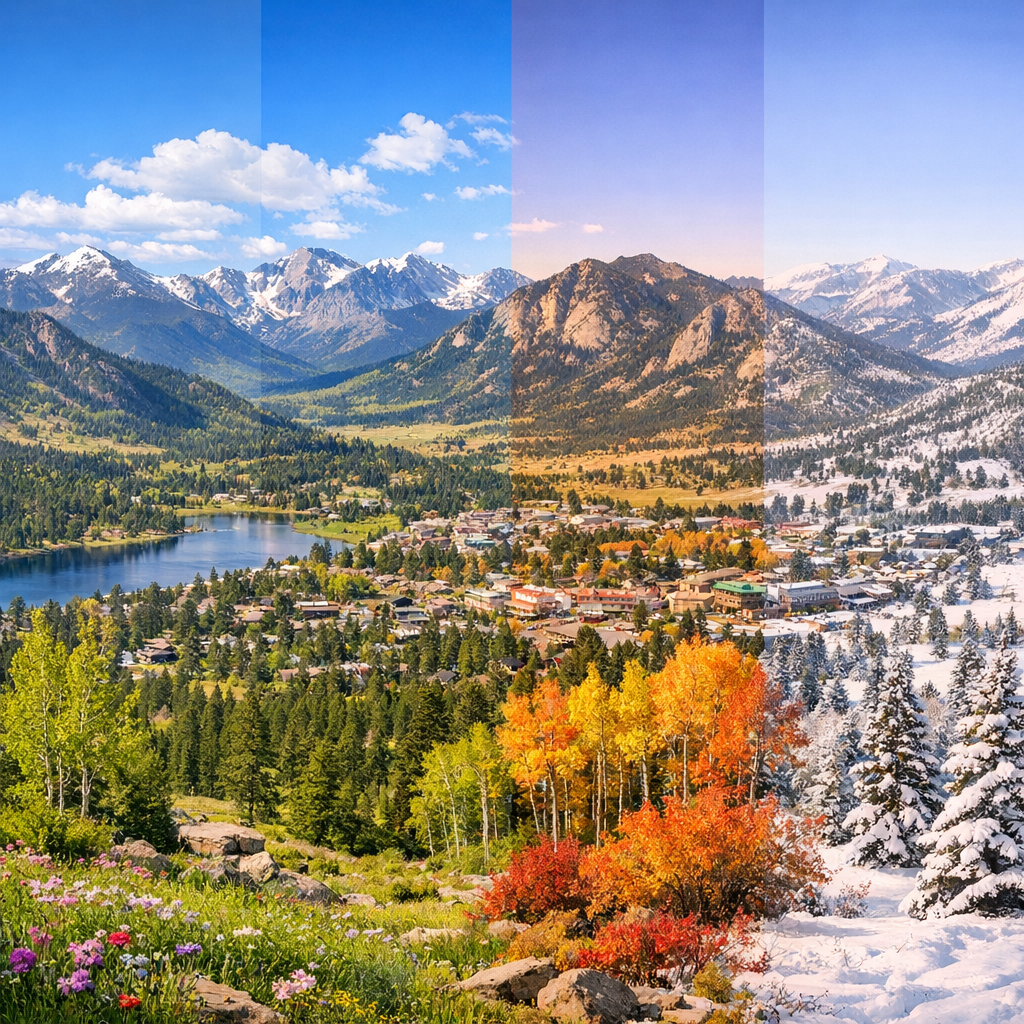
Estes Park, nestled at an elevation of 7,522 feet, boasts a subarctic climate characterized by cool summers and year-round precipitation. This unique climate influences both the natural environment and the activities available to residents and visitors.
Seasonal Weather Patterns
Spring
Spring in Estes Park is marked by variable weather, including snow at higher elevations and rain showers at lower ones. April temperatures typically range from the 20s to 50s, while May sees averages from the 30s to 60s. Surprise snowfalls are not uncommon during this season.
Summer
Summers are warm, with average high temperatures in the 70s and low humidity. Mornings are usually clear, making them ideal for outdoor activities. However, afternoon thunderstorms are common, so it’s advisable to plan hikes and other excursions accordingly.
Fall
Fall brings cooler temperatures and clear skies. September temperatures range from the 30s to 70s, while October sees averages from the 20s to 60s. This season is also notable for the changing aspen leaves and the elk rut, offering unique wildlife viewing opportunities.
Winter
Winters are cold, with average highs in the 30s and lows in the teens. Snow is common, but the sun often shines, creating a picturesque winter landscape. Activities like snowshoeing and cross-country skiing are popular during this season.
Impact on Local Activities
The diverse climate of Estes Park offers a range of activities throughout the year. Summer is ideal for hiking, fishing, and exploring the town. Fall provides opportunities for scenic drives and wildlife viewing. Winter is perfect for snow-related activities, while spring offers a mix of both winter and summer pursuits.
Understanding these seasonal patterns can help residents and visitors make the most of what Estes Park has to offer year-round.